
From June 5-18, Compass ran across Meta and geofenced venues throughout St. Pete Pride, reaching attendees and local residents.
The campaign ran one feed ad and one story ad, earning 40,851 appearances and reaching 21,089 people on Meta, meaning local audiences saw Compass' ads at least twice, on average. The ads drew 608 total clicks, 515 of which loaded through to the Pride collection.
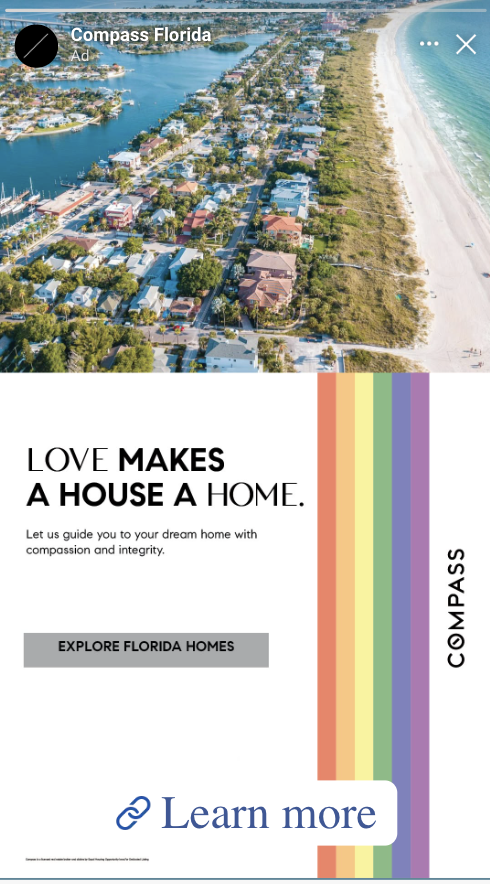
The story ad as seen on Instagram · St. Pete Pride 2026
Geofencing drew digital fences around 14 venues at St. Pete Pride. The map below shows where ad appearances concentrated over 14 days.
| Area | Highlights | Ad appearances |
|---|---|---|
| Crescent Lake | Crescent Lake Park, 10 of 11 geofencing clicks | 3,812 |
| Central Avenue | Central Ave Core, Grand Central, EDGE District, Historic Kenwood | 1,770 |
| Waterfront | St. Pete Pier, Beach Drive, Vinoy, North Straub | 322 |
Crescent Lake Park saw the heaviest foot traffic with 3,812 ad appearances and 10 of the campaign's 11 geofencing clicks at a 0.26% CTR. Overall geofencing CTR came in at 0.19%, inside the 0.10%-0.25% healthy range for location-based awareness campaigns.
The full-screen Story format makes "Love Makes a House a Home" stand out. For 2027, design the primary assets in Story-sized vertical.
A 2027 campaign should launch 3 or 4 tagline and image variations built around "Love Makes a House a Home" themed creative. A/B testing is an effective way to get data on what people engage with and find the most interesting and appealing.
Meta puts Compass in front of event attendees while they post on social. Google Display advertising reaches that same audience while they browse local news, check sports scores, and read lifestyle coverage. Geofencing captures the physical footprint at each venue and follows those attendees home with ads after the event ends. Running Meta, Google, and Geofencing for 30 days compounds the brand recognition that just started to build over two weeks. People see Compass multiple times across different platforms they actually use, and that repetition is what builds brand recognition.